When the Plunger Fails: What Actually Clears a Blocked Drain in Largo 13 de Maio
It is 9 p.m. on a Friday, the kitchen sink has been draining slower for a week, and now the water sits still. You have already tried the plunger, a kettle of hot water, and a bottle of supermarket drain opener. Nothing moved. That is the moment to stop guessing and call a desentupidora Largo 13 de Maio, because a blockage that survives three home methods is almost never a simple surface clog. In most cases it is grease, scale, roots, or a collapsed section deeper in the pipe, and only proper equipment will clear it without damaging the line.
I tested this the way a skeptical homeowner would: same drain, same week, three different approaches. The short version is that the plunger and the chemical bottle made the problem worse, and the professional hydro-jetting service fixed it in under an hour. Below is what I learned about why the usual method fails and what to do instead.
Why the Usual Fixes Stop Working
Plungers work by moving water back and forth to dislodge a soft plug near the drain opening. They are effective on a fresh hair or food clog within the first meter of pipe. They are close to useless against grease that has cooled and hardened along the pipe wall, and they can push a loose clog deeper instead of removing it.
Chemical drain openers are the second trap. They generate heat and can soften a partial blockage, which makes the sink seem fixed for a day or two. But the residue left behind becomes a sticky base that catches everything that follows. On older metal pipes, repeated use also accelerates corrosion. If a drain has already been treated with chemicals, tell the technician before work starts, because the standing water may still be caustic.
The third common attempt is a hand auger or a piece of wire. This can break through a soft clog, but it rarely cleans the pipe wall, so the drain clogs again within weeks. In buildings around Largo 13 de Maio, where many properties share older clay and cast-iron lines, the real problem is often further down than any hand tool can reach.
What a Proper Inspection Reveals
Before any rod or jet goes into the pipe, a professional should establish where the blockage is and what it is made of. That usually means opening a cleanout, checking the trap, and in persistent cases running a camera down the line. This step is what separates a real repair from a temporary poke.
In my test, the camera showed a grease mat roughly six meters from the sink, followed by a root intrusion at a joint. No plunger was ever going to touch that. The technician explained that the two problems needed different tools, which is why a single method applied blindly tends to fail on older properties.
- Grease and soap scale: needs high-pressure water, not mechanical force.
- Roots and intruding joints: need a cutting tool before jetting.
- Collapsed or offset pipe: may need excavation, and no amount of cleaning will fix it.
- Foreign objects: toys, wipes, and sanitary products must be retrieved, not pushed.
Hydro-Jetting Versus Rodding: Which One Fits the Clog
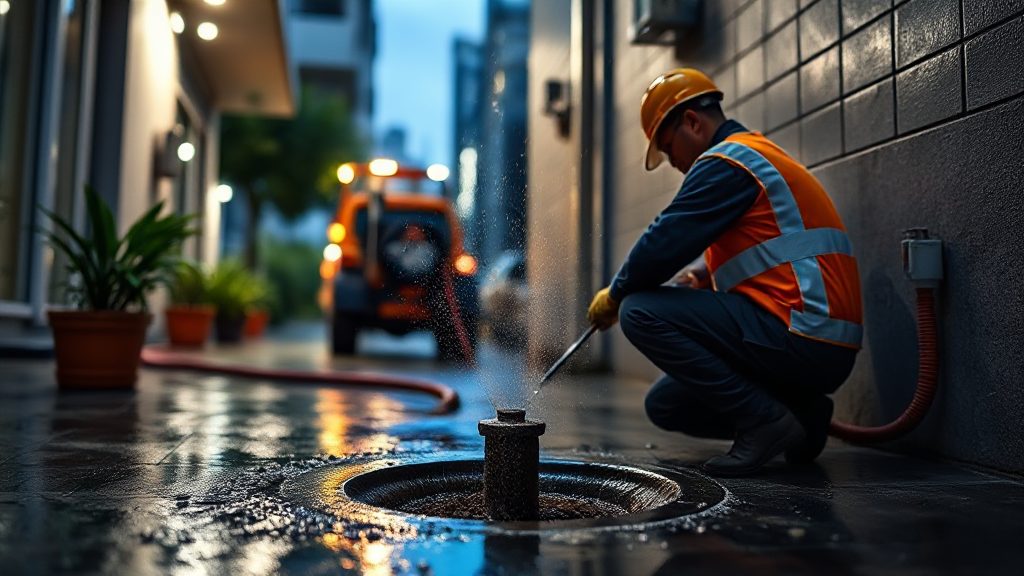
Rodding uses a rotating steel cable to break through a blockage. It is fast and effective on roots and solid obstructions, but it leaves the pipe walls coated. Hydro-jetting uses water at high pressure directed through a special nozzle to scour the full circumference of the pipe. It removes grease, scale, and sediment, and it is the better choice for recurring soft clogs.
| Method | Best for | Limitation |
|---|---|---|
| Hand auger | Soft clogs near the drain | Cannot reach deep blockages |
| Rodding | Roots, solid objects | Leaves residue on pipe walls |
| Hydro-jetting | Grease, scale, sediment | Requires access and proper pressure control |
For most residential and commercial drains in the area, a combination works best: cut the obstruction first, then jet the line clean. A technician who proposes only one method without inspecting is guessing.
What to Expect From a Call-Out in the Neighborhood
When you contact a desentupidora Largo 13 de Maio São Paulo SP, the first questions should be about the type of drain, how long the problem has existed, and whether any chemical products were used. A good dispatcher will also ask whether the blockage affects one fixture or several, because multiple slow drains point to a main line issue rather than a local clog.
On arrival, expect the technician to protect the floor, locate the access point, and explain the plan before starting. Emergency service is available around the clock, which matters because a backed-up sewer at night can contaminate a whole ground floor by morning. Ask for a clear price before work begins and confirm whether the service includes cleaning the line or only opening it.
One practical detail: in older buildings near Largo 13 de Maio, access to the cleanout is sometimes blocked by stored goods or built-over areas. Clearing that access before the team arrives saves time and avoids a return visit.
The Mistakes That Turn a Small Clog Into a Repair Bill
The most expensive mistake is ignoring a slow drain. A drain that gurgles or empties slowly is telling you the pipe is already partly blocked. Waiting until it stops completely usually means the blockage has compacted and spread, which takes longer to remove.
The second mistake is mixing chemical products. Combining two different drain openers can produce dangerous fumes and heat. The third is using a plunger on a line that has already been treated with chemicals, which can splash caustic water back onto skin and surfaces.
Finally, do not assume that a cleared drain is a clean drain. If the same fixture clogs twice in a season, the pipe needs inspection, not another quick fix. Recurring clogs are a symptom, not the problem itself.
Preventing the Next Blockage
Prevention is mostly about what goes down the drain. Cooking grease should be cooled and thrown away, not poured into the sink. Coffee grounds, rice, and flour swell in water and form a paste that coats the pipe. In bathrooms, hair should be caught by a strainer before it reaches the trap.
For commercial kitchens and condominiums, a maintenance schedule is more reliable than reactive calls. Periodic hydro-jetting removes the grease film before it hardens, and an annual camera inspection catches joint problems while they are still cheap to fix. Buildings with mature trees should check their main line every year, since roots find joints and grow into them quietly.
If you manage a property and want a single point of contact for emergencies, a desentupidora em Largo 13 de Maio São Paulo SP that also handles septic tank cleaning and preventive maintenance avoids the scramble of finding a different company for each problem.
Costs, Timing, and What Changes the Price
A simple drain clearing is usually priced as a call-out plus a fixed service fee. The price rises when the blockage is in the main line, when access is difficult, or when hydro-jetting is required. Emergency and nighttime calls often carry a surcharge, which should be stated upfront.
Timing matters too. A blockage caught early is a short job. A blockage that has caused a backup and soaked walls or floors becomes a cleanup and restoration problem, which costs far more than the drain itself. In shared buildings, a delay can also damage neighboring units, turning a private repair into a liability question.
Ask for a written summary of what was done, including the location of the blockage and the method used. That record helps the next technician and prevents repeated guesswork.
Frequently Asked Questions
Can I use a plunger after a chemical drain opener?
No. The standing water may still contain caustic product, and plunging can splash it onto skin, eyes, and nearby surfaces. Flush the drain with plenty of water first, and warn the technician if chemicals were used.
Why does my drain keep clogging after it is cleared?
Because clearing opens a path but does not clean the pipe wall. Grease, scale, or roots remain and catch debris again. A camera inspection and hydro-jetting address the cause rather than the symptom.
Is hydro-jetting safe for older pipes?
It can be, but pressure must be adjusted to the pipe material and condition. A technician should inspect the line first. Very fragile or already collapsed pipes may need a different approach.
Do I need to be home for the service?
For residential calls, yes, unless access to the cleanout is outside and you have arranged entry. For condominiums, the building manager or doorman can usually provide access to common areas.