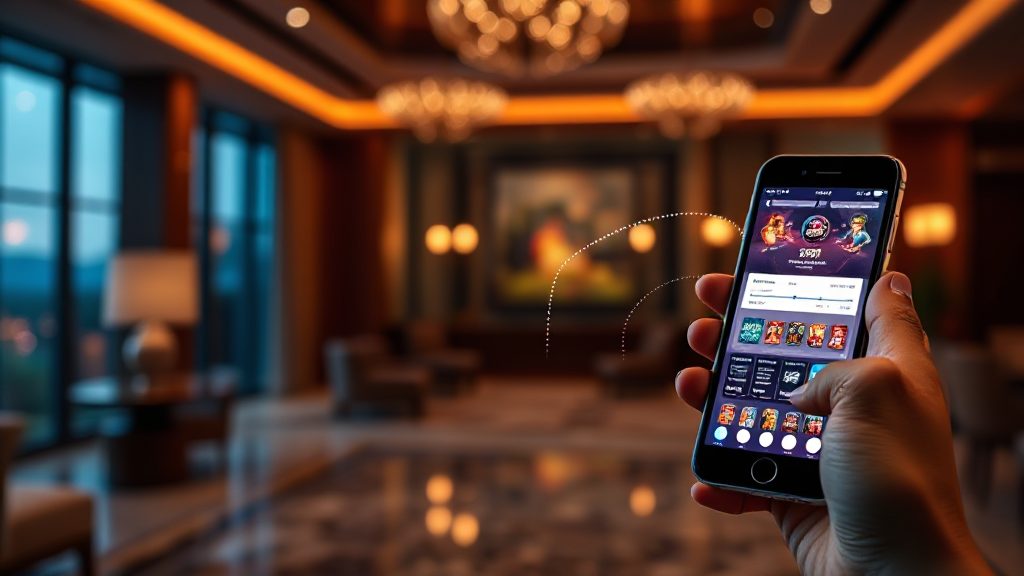
The Shape of a tk999 Session, Step by Step
Every app session has a shape. Some are long and wandering, others short and direct, and a few settle into a rhythm so consistent that you can almost draw them. The tk999 session belongs to that last group: once you notice the pattern, the path from opening the app to closing it becomes fairly predictable.
What follows is a neutral map of that path, not a set of instructions. It describes the stages a typical user moves through, the small pauses that show up along the way, and how the terrain shifts between a first visit and a well-worn tenth one.
Stage one: the approach and first screen
The session begins before the app is even open. Most users arrive with a purpose already formed, whether that is checking a market, browsing a lobby, or simply seeing what has changed since the last visit. The first screen is where that purpose meets the interface, and it is usually where the first hesitation appears.
New users tend to pause here longer than they expect. The layout invites scanning, and scanning takes time. Returning users often skip the scan entirely, heading straight for a familiar corner of the screen.
Stage two: registration or sign-in as the gate
For anyone without an account, the gate comes early. The registration flow asks for the usual details, and this is the stage where many first-timers slow down to read rather than tap through. It is a natural pause: the form is the point where a casual visitor decides whether to continue.
Existing users pass through this stage in seconds. Sign-in is muscle memory, and the gate barely registers. The interesting difference is not the speed but the attention: a first-timer reads, a regular barely looks.
Stage three: the lobby as a crossroads
Past the gate, the session opens into the lobby, and this is the widest part of the map. The lobby is a crossroads where different interests branch off: sports markets on one side, game categories on another, account details tucked somewhere quieter. Where a user turns here largely determines the shape of everything that follows.
Hesitation in the lobby is common and usually harmless. Users compare options, check what is live, and drift between sections before committing. It is the stage with the most back-and-forth, and the one where sessions most often change direction mid-flow.
Stage four: the core activity and its rhythm
Once a user settles into a section, the session finds its rhythm. The core activity is where time compresses: screens change quickly, attention narrows, and the wider app fades into the background. This is the longest stage of the session for most people, and the one least interrupted by hesitation.
Pauses here are different in character. They are not decision pauses so much as checking pauses: a glance at a balance, a confirmation of a selection, a moment of review before moving on. The rhythm is steady, and the interface is designed to keep it that way.
Where the rhythm breaks
The rhythm breaks most often at confirmation points. Any step that asks a user to commit, whether to a selection or a transaction, introduces a brief stop. Users who have done it many times barely notice; users who have not tend to read twice.
Payment and account steps are the other common break. These are the moments where the session briefly leaves the flow and becomes administrative, and it shows in the pace.
Stage five: the exit and the return path
Every session ends, and the exit is usually quieter than the entrance. Users close the app when their purpose is satisfied or when time runs out, and the closing moves are typically quick: a final check, a tap away, and the screen goes dark.
What matters for the shape is what happens after the exit. Many users return within the same day, and the return path is shorter than the first approach because the map is already known. The second session of the day often skips the lobby scan entirely.
First visit versus tenth: how the flow changes
The map is the same on a first visit and a tenth, but the traveller is not. A first session is slower at every gate: more reading at registration, more scanning in the lobby, more double-checks at confirmation points. A tenth session is leaner, with whole stages compressed into a few taps.
The clearest difference is where hesitation lives. On a first visit it clusters at the gate and the lobby. On a tenth visit it has mostly disappeared, surfacing only at the moments that genuinely require a decision. The shape of the session narrows over time, and what remains is the rhythm at the centre.
That is the value of mapping the flow at all: not to prescribe a route, but to notice where the path widens and where it narrows. A tk999 session is consistent enough to be drawn, and the drawing is most useful to anyone who wants to understand their own pauses rather than eliminate them.