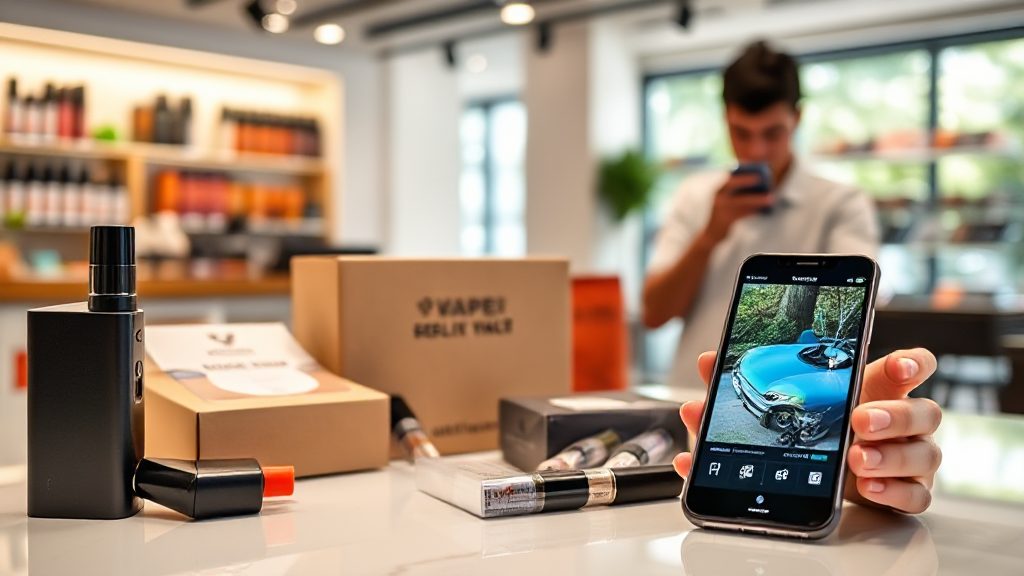
Where Same-Day Vape Delivery Could Go Next
This is informed speculation, not a forecast. Nobody can say with certainty how same-day vape delivery will look in Singapore a few years from now, but the signals are clear enough to sketch plausible directions. For adult buyers who already order online, the interesting question is not whether convenience will improve, but which parts of the experience will change first and what that means for how you buy.
Today, a service like sg vape delivery competes on speed, discretion and authenticity. Those three pressures are unlikely to disappear. If anything, they will shape the next round of changes, from how orders are packed to how quickly a replacement pod reaches your door. The scenarios below explore where that pressure could lead.
Scenario one: delivery windows shrink from hours to slots
The most visible change in online retail is usually time. Same-day delivery already feels fast, but the next step is often narrower windows rather than simply faster arrival. Instead of being told your parcel will come today, you might choose a two-hour slot that fits around work or errands.
For vape buyers, that matters because devices and pods are often bought at the moment of need. A pod that runs dry mid-afternoon is a different problem from a restock planned a week ahead. Slot-based delivery would turn a convenience into something closer to an on-demand utility, and retailers that already manage their own couriers would be best placed to offer it.
Why this is plausible
The operational building blocks already exist. Route planning, live order tracking and rider allocation are common in food and grocery delivery, and vape retailers that run their own SG Vape same day delivery operation can borrow the same logic. The caveat is cost: narrow windows are harder to batch, so they tend to appear first as a premium option rather than the default.
What could slow it down
Volume matters. A retailer needs enough orders per area to make tight slots efficient. In quieter districts, a two-hour window may stay a promise rather than a guarantee for some time.
Scenario two: authenticity checks become part of the checkout
Counterfeit pods are a persistent worry in any popular product category, and vape hardware is no exception. A forward-looking shift would be to make verification visible before the parcel arrives, not after. Think batch codes shown at checkout, scannable labels on the packaging, or a short authenticity note attached to each order.
This is where the language of retail starts to overlap with trust. Buyers searching for a vape supplier singapore are often trying to answer one question: is this genuine? A retailer that can answer that question at the point of sale, rather than in a support email afterward, gains an advantage that is hard to copy quickly.
How verification might look in practice
- A visible batch or serial reference on the order confirmation.
- Packaging that can be checked against the brand’s own records.
- Clear product pages that name the exact model, such as a Sg vape disposable line, rather than vague category labels.
The caveat is that verification only works if brands cooperate. A retailer can publish codes, but the value depends on buyers being able to check them easily.
Scenario three: product pages get more specific, not just faster
Speed is easy to advertise, but specificity is what keeps buyers returning. A plausible next phase is that online vape shops compete less on delivery promises and more on how well their listings describe what you are getting. Puff counts, pod compatibility, flavour profiles and device dimensions all become part of the buying decision.
You can already see this in how named products are sold. A buyer looking for a sg vape lana model wants to know which variant is which, not just that a disposable is available. As catalogues grow, clearer naming and comparison tables could do more for conversion than another hour shaved off delivery time.
The trade-off for retailers
Detailed listings take effort to maintain, and product lines change quickly. The retailers most likely to benefit are those that treat their catalogue as a living document rather than a one-time upload.
Scenario four: discreet packaging becomes a standard, not a selling point
Discretion is already a core expectation in this category, and the direction of travel is toward it being assumed rather than advertised. Plain outer packaging, neutral sender names and no product descriptions on the label are likely to become baseline requirements rather than differentiators.
That shift changes how retailers talk about themselves. If every serious operator offers discreet delivery, the marketing moves elsewhere, perhaps to reliability or product range. For buyers, the practical effect is simple: fewer surprises at the door and less need to ask how a parcel will be packed.
What to watch
Look at whether a shop states its packaging policy plainly on the site. A clear statement is a better signal than a slogan, and it tells you whether discretion is built into the process or added on request.
Scenario five: the buying experience moves onto messaging and apps
Ordering through a website is normal now, but the next shift could be toward lighter interfaces: saved carts, repeat-order buttons and order updates pushed through messaging apps. For frequent buyers, reordering a familiar pod could become a two-tap action rather than a full checkout.
This is plausible because the underlying behaviour already exists. People who find a device they like tend to stick with it, and a lana vape delivery repeat order is a natural candidate for one-click reordering. The caveat is that convenience features only help if the product is in stock and the delivery promise holds.
Why messaging matters
Order updates are the part of delivery people actually notice. A short message confirming dispatch and arrival does more for trust than a polished homepage, especially for first-time buyers who are unsure what to expect.
Scenario six: regulation and logistics reshape the map
Any honest look at this topic has to acknowledge that rules and logistics set the boundaries. Delivery coverage, courier availability and legal requirements all influence what a shop can promise. A forward-looking view is not about guessing policy, but about recognising that the delivery map may change shape over time.
One plausible outcome is that coverage becomes more uneven rather than uniformly faster. Dense areas may see tighter windows, while outlying areas keep broader ones. Another is that retailers lean harder on their own fleets to control the experience end to end, which is the model behind a dedicated Singapore vape delivery service.
How to read the signals
Watch how a shop describes its coverage and cut-off times. Clear, specific language is usually a sign of an operation that knows its own limits, which is more useful than a vague promise of speed.
What to watch over the next few years
The through-line across these scenarios is that competition is likely to move from raw speed toward reliability and clarity. Fast delivery will remain the headline, but the details underneath it, such as slot options, authenticity checks and plain-language packaging policies, are where the real differences will show.
For adult buyers, the practical advice is to judge a shop on specifics: how clearly it describes its products, how it handles verification and how it communicates after checkout. Those signals tend to predict whether the parcel arrives as promised. If you want to see how one operator currently approaches these points, the vape supplier singapore catalogue and delivery terms are a reasonable place to start comparing.
Frequently asked questions
Is same-day vape delivery likely to get faster?
Possibly, but the bigger change may be narrower delivery windows rather than simply faster arrival. Slot-based options are a more realistic next step than a dramatic cut in overall delivery time.
Will discreet packaging remain standard?
It is likely to become an assumed baseline rather than a selling point. As more shops adopt plain packaging and neutral labels, discretion stops being a differentiator and starts being an expectation.
How can I tell if a product is authentic when ordering online?
Look for specific product naming, batch or serial references, and clear packaging descriptions. A shop that names exact models and explains how to verify them is generally easier to trust than one that keeps listings vague.
Could ordering move to apps or messaging?
That is plausible for repeat buyers. Saved carts, reorder buttons and order updates through messaging apps would suit people who already know which device they want.